Quick answer
The khiva to aral sea route takes 10 to 12 hours by 4x4 vehicle, covering 550 kilometers through Karakalpakstan with one mandatory checkpoint stop in Nukus. Most travelers break the journey in Nukus overnight, refuel, and continue the 220-kilometer unpaved stretch to Moynaq at dawn. Free access to the Aral Sea basin year-round; no entrance gate or ticketing at the shore.
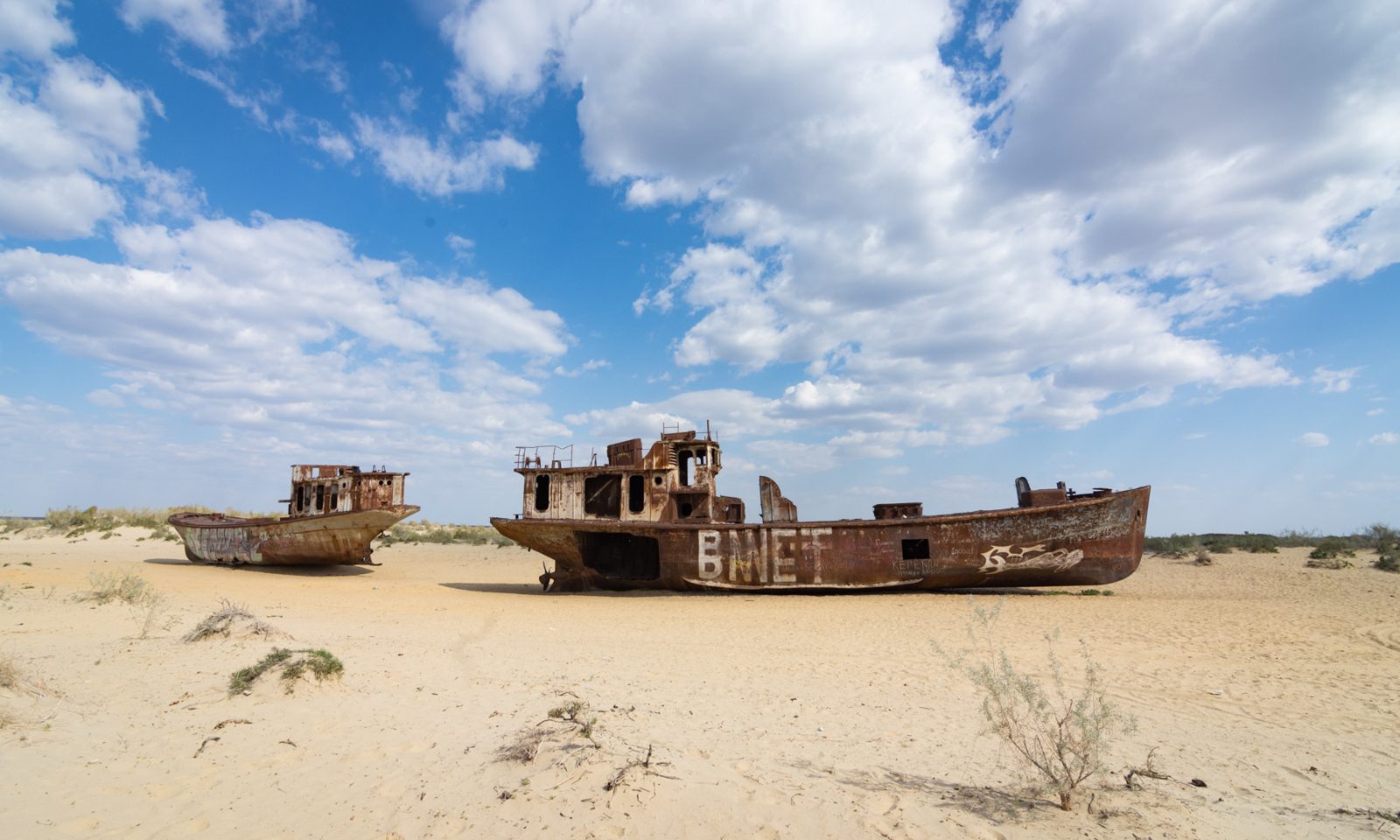
No scheduled bus service connects Khiva directly to the Aral Sea. The khiva to aral sea crossing demands either a private hire or participation in a multi-day desert convoy, both requiring advance booking through Khiva-based operators or guesthouses in the old-town district. The paved M32 highway runs 330 kilometers northwest from Khiva to Nukus, Karakalpakstan's regional capital, where the asphalt ends and the final approach begins. From Nukus the terrain shifts to compacted sand tracks and gravel roads cutting through Ustyurt Plateau scrubland. Four-wheel-drive capability is non-negotiable; sedan clearance bottoms out on washboard ruts within the first 50 kilometers. Fuel availability drops to zero past Nukus until reaching Moynaq, the former fishing port now stranded 150 kilometers from the retreating shoreline. Drivers carry reserve jerry cans and navigate by GPS waypoint rather than road signage, which disappeared with Soviet-era infrastructure. Checkpoint registration in Nukus is compulsory for all vehicles entering Karakalpakstan's border zone; expect a 20-minute document review and vehicle inspection. Moynaq serves as the staging point for shore access. The ship graveyard—a cluster of rusted trawlers marooned on dried seabed—sits 2 kilometers north of the town center, reachable by sand track. The actual water's edge lies another 12 kilometers beyond Moynaq, accessible only by high-clearance 4x4 during dry months. Spring runoff from the Amu Darya occasionally refills shallow bays near Sudochye Lake, but the main basin remains a salt-crusted plain. No services exist at the shore: no shade structures, no water taps, no marked trails. Visitors carry their own provisions and navigation tools. Return logistics mirror the outbound route. Drivers refuel in Moynaq or return directly to Nukus before nightfall to avoid navigation in darkness. Organized convoys synchronize their return leg to share tire-change labor and mechanical support, a practical safeguard on a route where cellular coverage fades 60 kilometers past Nukus. The journey from Khiva to the Aral Sea remains one of Central Asia's most logistically demanding overland routes, requiring vehicle capability, supply planning, and flexible timing to execute safely.
“No scheduled bus service connects Khiva directly to the Aral Sea—the crossing demands either a private hire or participation in a multi-day desert convoy.”
Transport and Route Planning: Khiva to Aral Sea Logistics
The Aral Sea is located in the remote Karakalpakstan region, accessible primarily by road from the city of Nukus. There is no direct public transport to the Aral Sea basin, necessitating the use of a private 4x4 vehicle.
Khiva to Nukus via A380 road
Nukus to Moynaq via P-181 road
Moynaq to Aral Sea coastline (4x4 required)
Best Time to Travel from Khiva to Aral Sea
The period from April to May and September to October offers the most favorable conditions for travel from Khiva to the Aral Sea. Planning your arrival for the early morning is essential to manage desert temperatures and utilize ideal lighting.
Spring (April–May)
ModerateMild, 15°C to 25°C. Vegetation begins to bloom in the desert region.
Autumn (Sept–Oct)
ModerateCool, 10°C to 20°C. Stable weather patterns provide clear visibility for site exploration.
Summer (June–Aug)
LowExtreme, exceeding 40°C. High heat presents significant physical challenges for travelers.
Daily Window
N/A—. The best arrival window: 06:00–10:00 — Avoid extreme desert midday heat and catch optimal light for photography.
Verdict: The best window for this journey is during April or October, specifically targeting an arrival between 06:00 and 10:00.
Planning Your Khiva to Aral Sea Itinerary
A realistic two-day itinerary from Khiva to the Aral Sea basin, accounting for the long overland journey and arrival conditions. Plan for one overnight stop in Nukus to break the drive and visit the Savitsky Museum en route.
Depart Khiva for Nukus
Leave early to cover the 450 km drive north through the Kyzylkum Desert. The journey takes 6–7 hours; bring water and snacks as roadside facilities are sparse.
Arrive Nukus, visit Savitsky Museum
Break the journey with a stop at the Karakalpakstan State Museum of Art, housing one of Central Asia's foremost collections of Russian avant-garde works. Allocate 1–2 hours.
Overnight in Nukus
Rest in Nukus to tackle the final stretch refreshed. Local guesthouses and hotels provide straightforward lodging and evening meals.
Nukus to Moynaq (200 km)
Continue north through flat desert terrain; the drive takes 2.5–3 hours. Moynaq serves as the gateway to the former seabed and ship graveyard.
Explore Moynaq ship graveyard
Walk among the rusted fishing vessels stranded since the 1960s. The site is open-air with no shade; early arrival avoids midday heat.
Drive to the Aral Sea basin
Push a further 60–80 km north on rough track to reach the exposed seabed and remaining water pools. A 4WD is essential; the journey takes 1.5–2 hours.
Aral Sea basin and return
Survey the salt flats, photograph the distant water line, and begin the return journey to Moynaq by mid-afternoon to reach Nukus before dark.
Khiva to Aral Sea Visit Checklist
Remote desert conditions and regional access rules require advance preparation beyond a standard day trip.
-
Confirm tour operator permits for Karakalpakstan — Regional travel permits are mandatory and arranged through licensed operators.
-
Pack 3+ liters of water per person — No services exist between Moynaq and the former shoreline.
-
Bring sun protection and layered clothing — Desert temperatures swing 20°C between dawn and midday.
-
Carry passport and Uzbekistan registration slip — Checkpoints between Khiva and Moynaq verify documentation.
-
Download offline maps for the Moynaq route — Mobile coverage drops completely 40 km north of Nukus.
-
Prepare a basic first-aid kit — Medical facilities are unavailable within 150 km of the site.
Check availability
Frequently asked questions about khiva to aral sea
Everything you need to know about khiva to aral sea