14 hr
Moynaq Ship Graveyard & Aral Sea Disaster
- Expert local guide
- Small group
- Skip-the-line access
- Free cancellation
Khiva Aral Sea Tour — Ship Graveyard & Desert Expeditions
Soviet ghost fleets rise from salt flats, where the seafloor became desert in a single lifetime.
Compare fares, pick the fit — all bookings are mobile-voucher and eligible for free cancellation where shown.
14 hr
16 hr
48 hr
| Experience | Duration | Rating | Skip-the-line | Guide | Small group | Free cancel. | Price | |
|---|---|---|---|---|---|---|---|---|
|
Guided Experience
Most popular
Moynaq Ship Graveyard & Aral Sea Disaster
|
14 hr | ★ 4.9 | ✓ | ✓ | ✓ | ✓ | €153 | Book → |
|
Guided Experience
Muynak Ship Graveyard & Nukus Museum from Khiva
|
16 hr | ★ 5.0 | ✓ | ✓ | ✓ | ✓ | €172 | Book → |
|
Guided Experience
Aral Sea Expedition with Yurt Camp Overnight
|
48 hr | ★ 4.6 | ✓ | ✓ | ✓ | ✓ | €587 | Book → |
Worth it for history-conscious travelers willing to commit
A khiva aral sea tour demands a full travel day—14 to 16 hours round-trip across desert highway—to witness one of the century's starkest ecological disasters. The 30,000 UZS conservation fee is modest, but the real cost is time: you'll trade dawn departure and late return for two hours at the ship graveyard in Moynaq, where rusted trawlers rest on sand that was seabed four decades ago. Expedition packages with yurt camp overnights stretch the commitment but deepen immersion in the dried lakebed and surrounding desert. Day tours pairing Moynaq with Nukus Museum anchor the disaster narrative in Karakalpak art and Soviet-era context. Skip if your Uzbekistan itinerary prioritizes Silk Road architecture over environmental history; commit if seeing the desiccated Aral basin firsthand carries more weight than another madrasah. The journey itself—endless steppe, salt flats, fishing villages without fish—is half the lesson. Tours from Khiva package transport and guiding, turning logistical burden into structured storytelling.
Bottom line: The khiva aral sea tour pays off when environmental history and remote witness matter more to you than comfort or convenience.
They complement each other; most visitors who do both call the khiva aral sea tour the more thrilling adventure.
|
Top pick Aral Sea Expedition |
Khiva-Bukhara Transit | |
|---|---|---|
| Primary focus | Ship wrecks and desert | Silk Road architecture |
| Duration | 1–2 days | 8–10 hours |
| Transport | 4WD off-road vehicle | Shared taxi or private car |
| Terrain | Salt plains and canyons | Karakum desert highway |
| Landscape | Post-apocalyptic scenery | Rural oasis and dunes |
| Entrance fee | 30,000 UZS (summer) | No entrance fee required |
| Photography | Ship wrecks and landscapes | Old town street scenes |
| Best time | 09:00–18:00 | Daylight hours |
| See tickets & prices |
Verdict: Choose the khiva aral sea tour for remote wilderness exploration, or the road trip if you prefer cultural transit between historical landmarks.
Hand-picked experiences loved by thousands of travelers
4 hours
Free Cancellation
Journey through Itchan Kala's ancient streets and discover centuries of Silk Road architecture
2.5 hours
Free Cancellation
Explore Khiva's UNESCO-listed walled city with a born-and-raised guide through stunning Silk Road architecture
3 hours
Free Cancellation
Journey through Khiva's UNESCO-listed old town with a guide who brings centuries of Silk Road history to life.
2 days
Free Cancellation
Two-day journey to the vanishing Aral Sea with canyon visits, Soviet ship graveyard, and yurt camp
15 hours
Free Cancellation
Private journey across Karakalpakstan to witness the haunting remnants of a vanished sea and Central Asia's hidden art treasure
6 hours
Free Cancellation
Journey through the Kyzylkum Desert to explore three monumental Silk Road fortresses from ancient Khorezm.
6 hours
Free Cancellation
Journey through three ancient ruins in the Kyzylkum Desert, ending with sunset views and dinner.
9 hours
Free Cancellation
Turn a long drive into a Silk Road adventure through three ancient Khorezm fortresses in the desert.
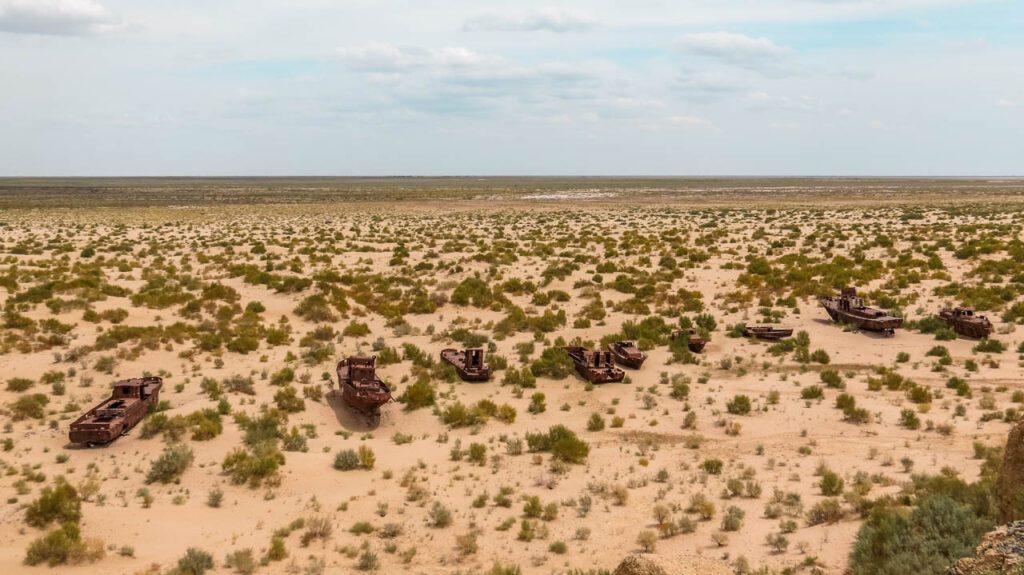
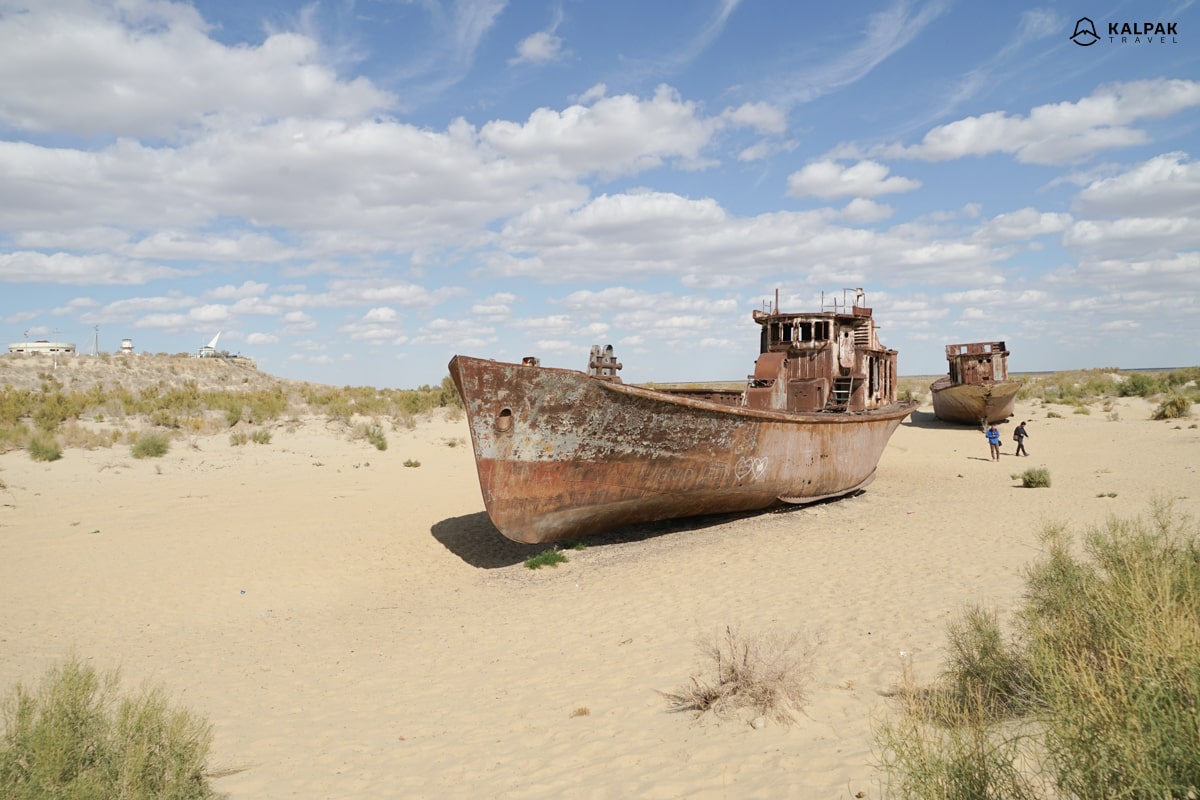
See rusting fishing vessels abandoned in the desert sands of the former sea.
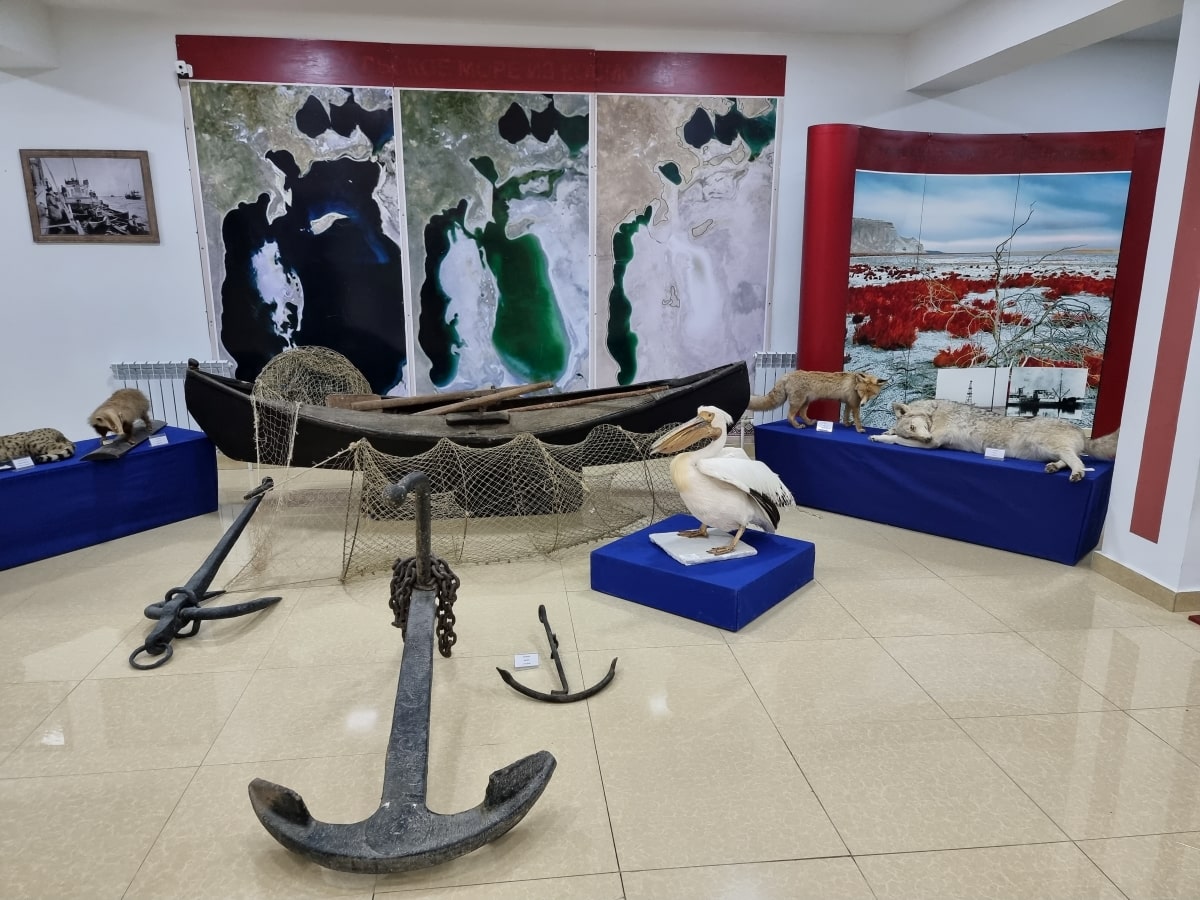
View historical artifacts and maps documenting the sea's tragic environmental decline.
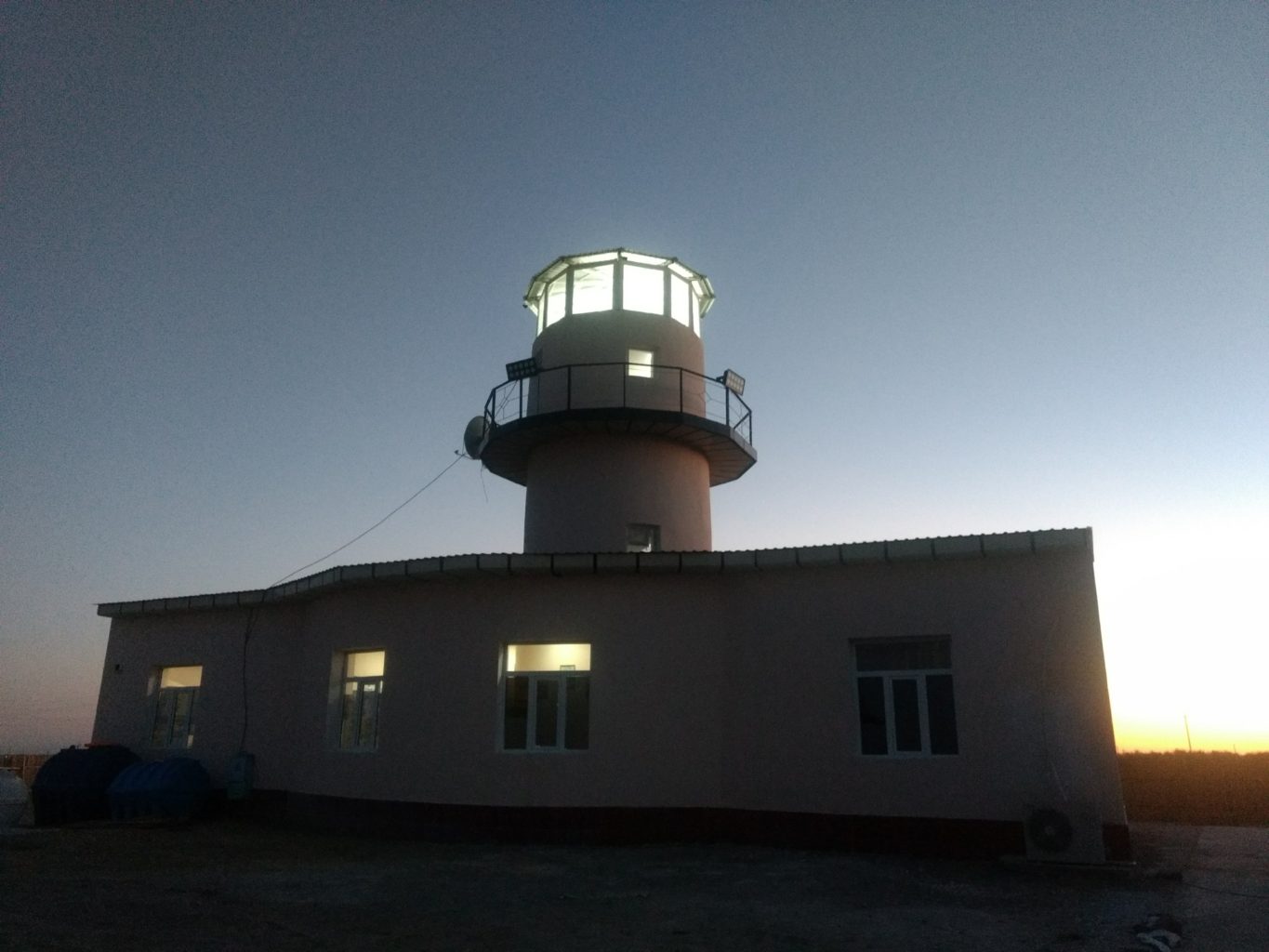
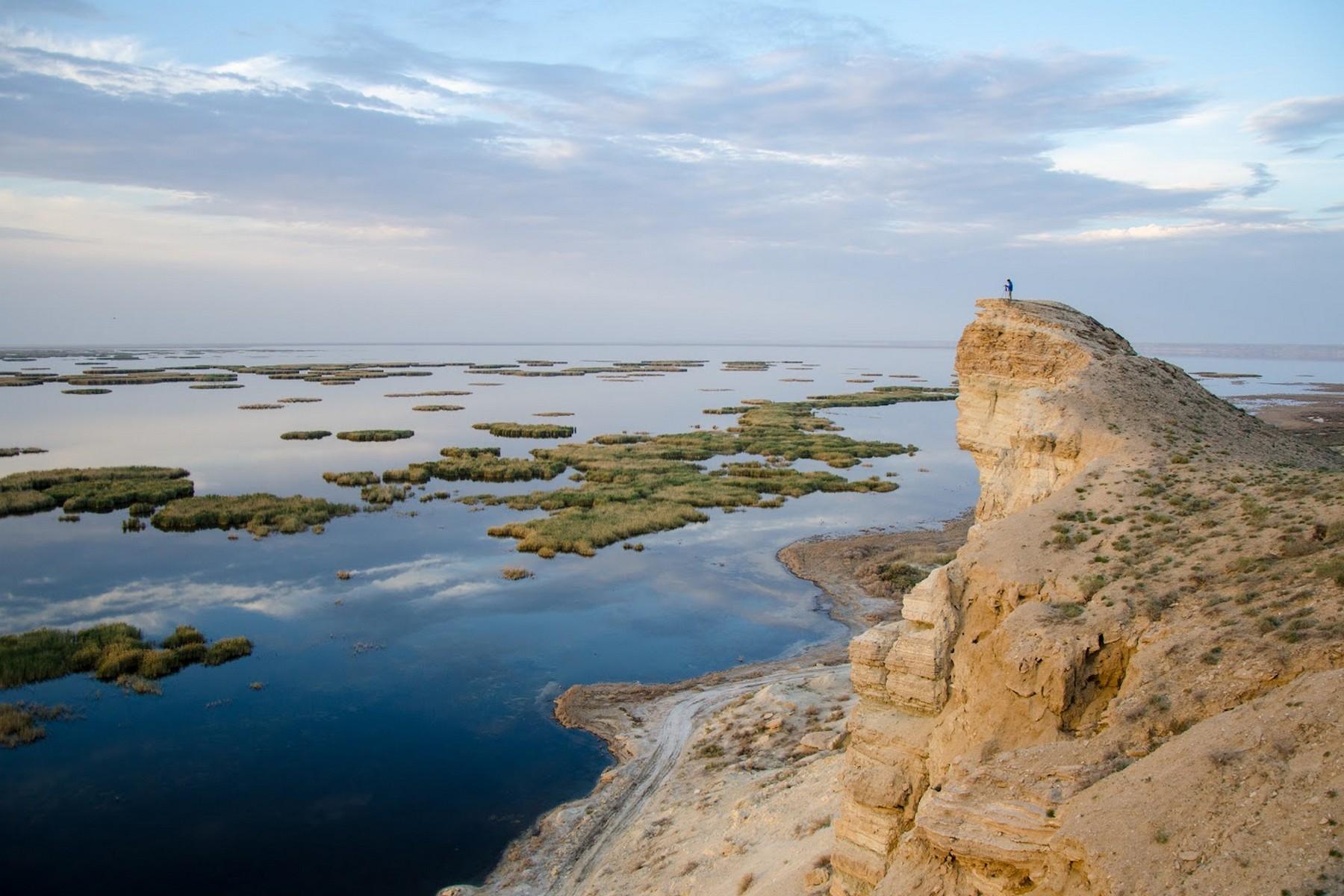
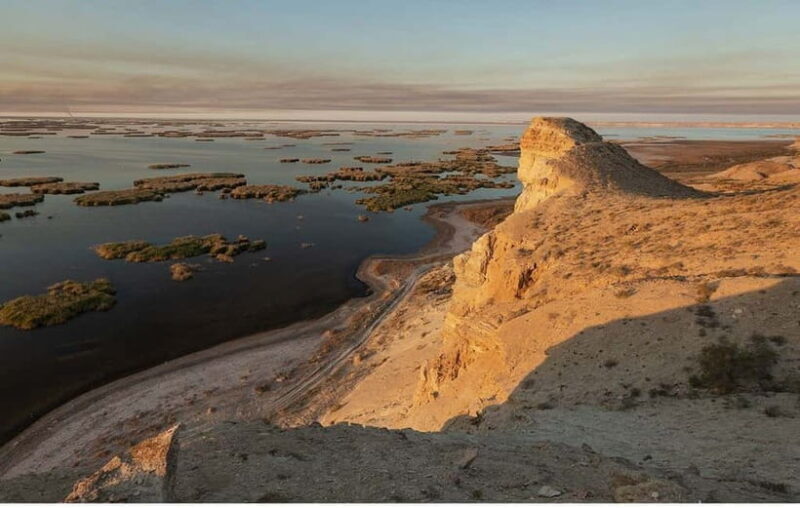
Located near the former shoreline, this provides a vantage point over the Aralkum Desert.
Explore the remnants of the industrial facility that once processed thousands of tons of fish.
You leave Khiva before dawn, crossing the Amu Darya at first light as the highway stretches northwest through cotton fields that thin into scrubland. By midday the road skirts the Ustyurt Plateau, where the steppe gives way to cracked salt pans and the air turns alkaline.
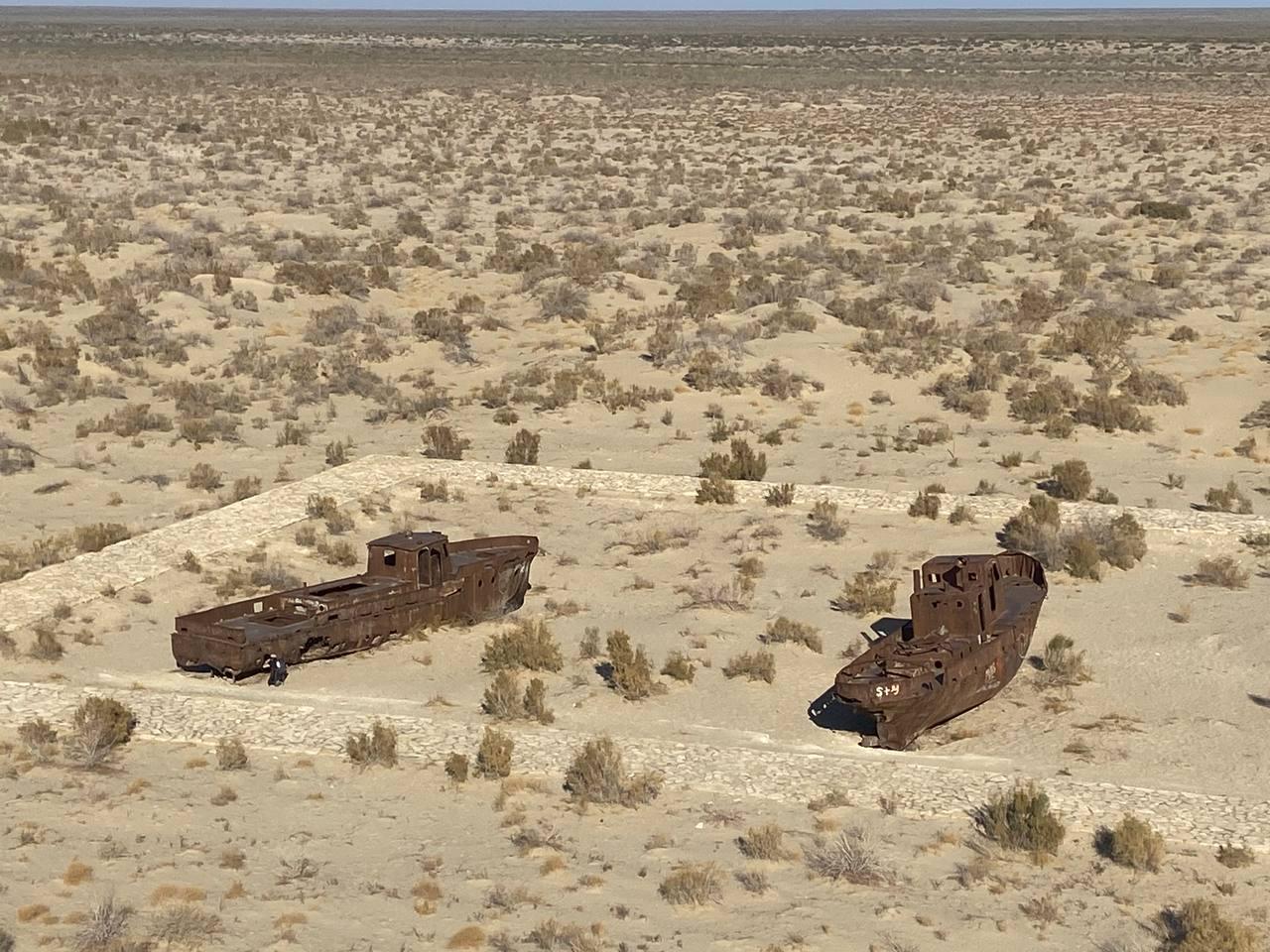
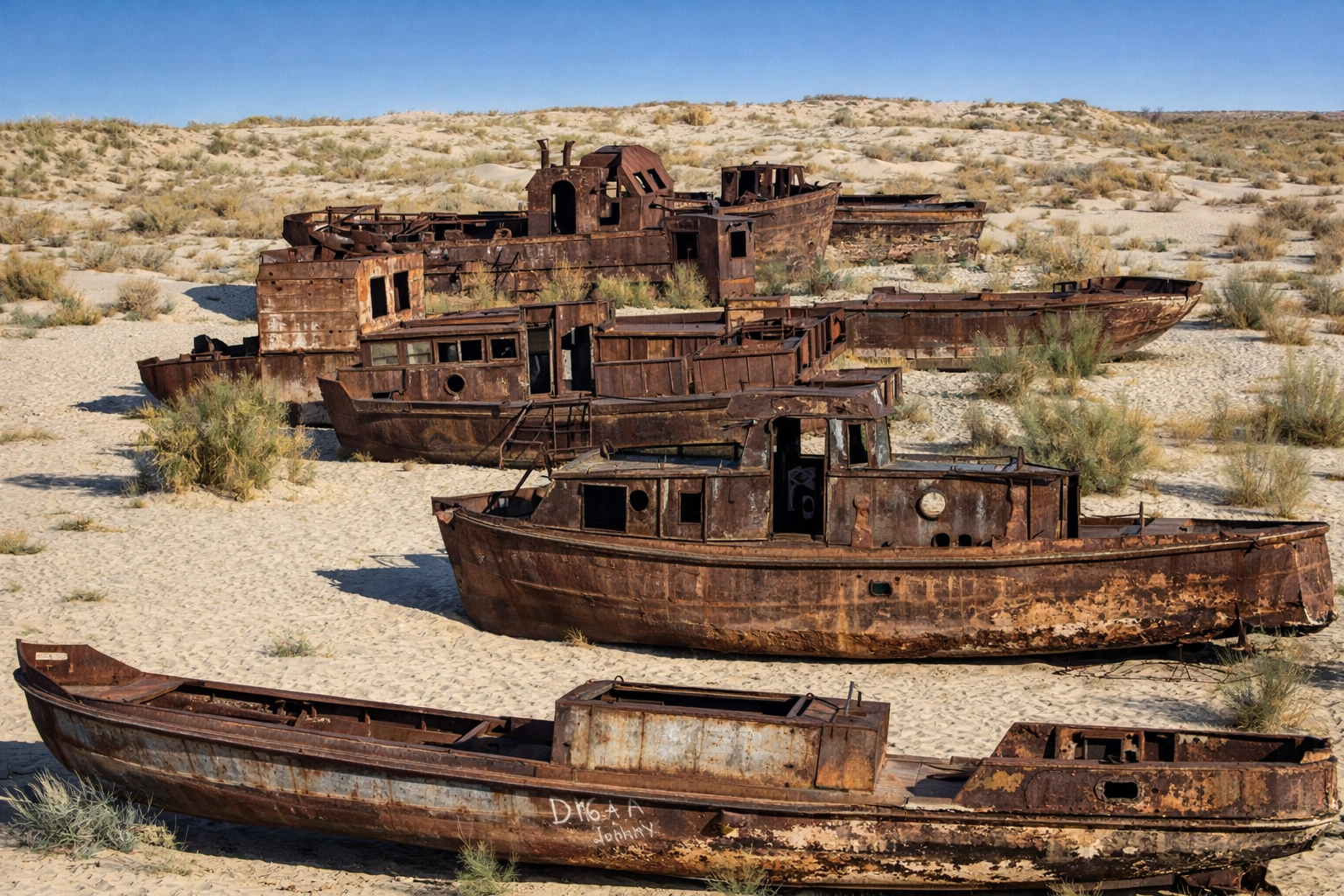
You reach Moynaq in late afternoon, the ship graveyard rising from the desert floor as a jagged line of rust against pale sand.
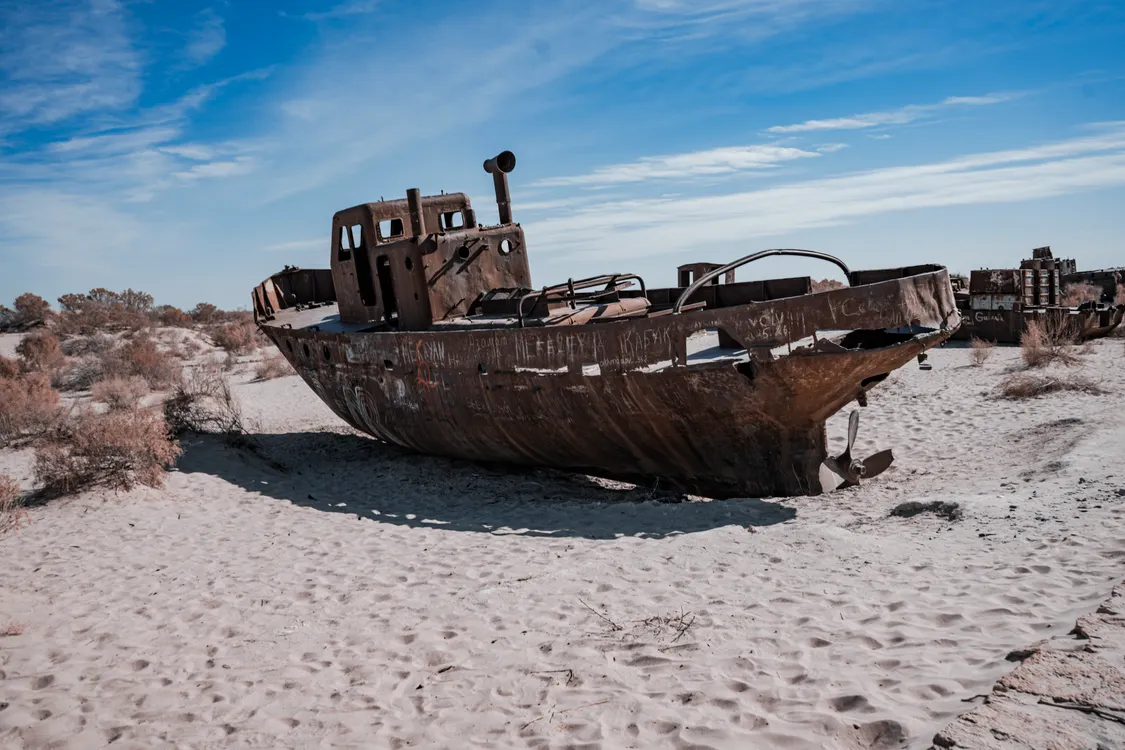
You walk among the trawlers, their hulls towering three metres overhead, hulls pierced by wind and time. Cyrillic letters spell out names in faded paint; inside one cabin, a compass housing lies half-buried in sand. The light slants low, casting long shadows across the Aralkum, and you climb onto a bow to photograph the fleet stretching toward the horizon.
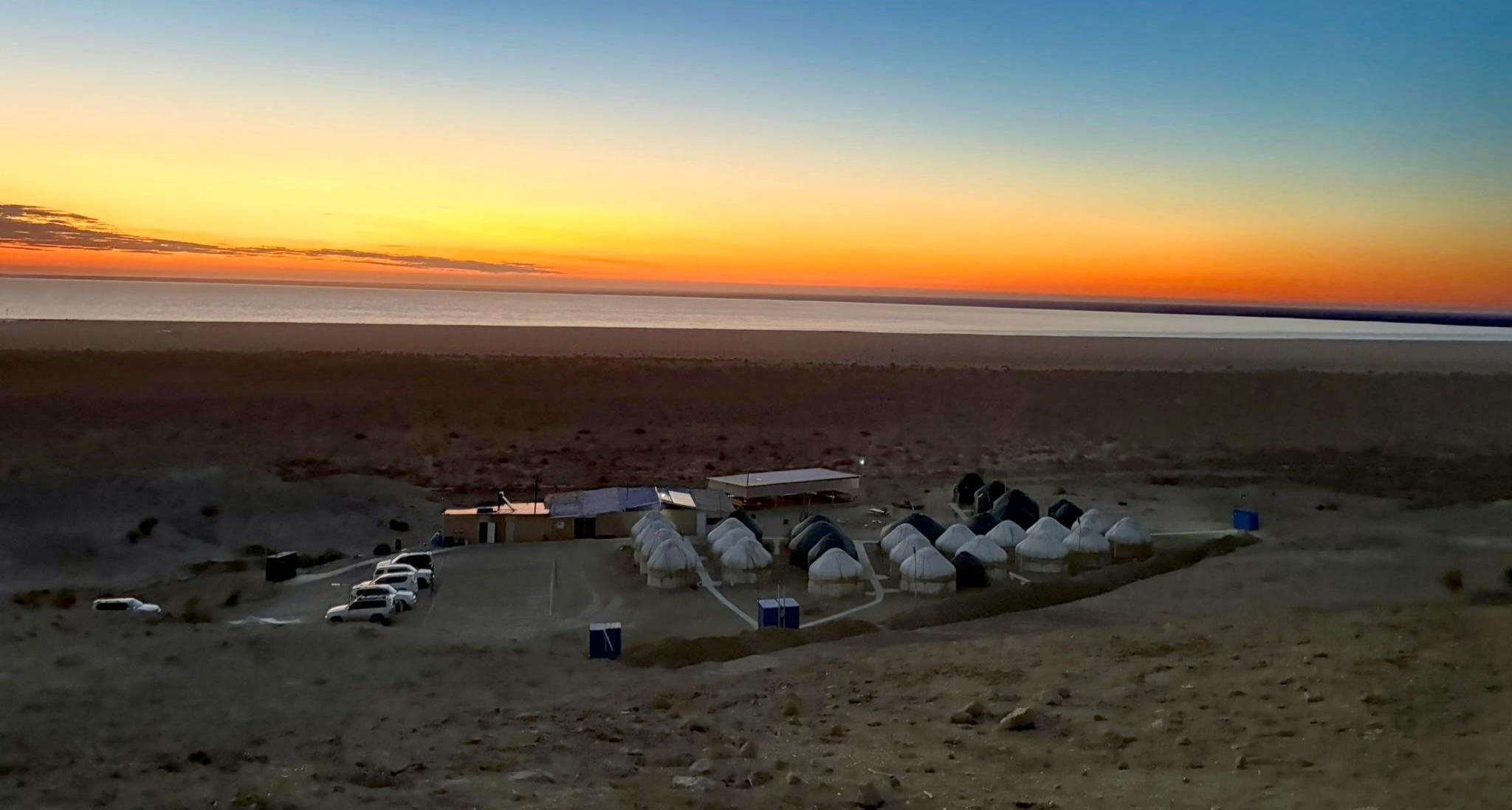
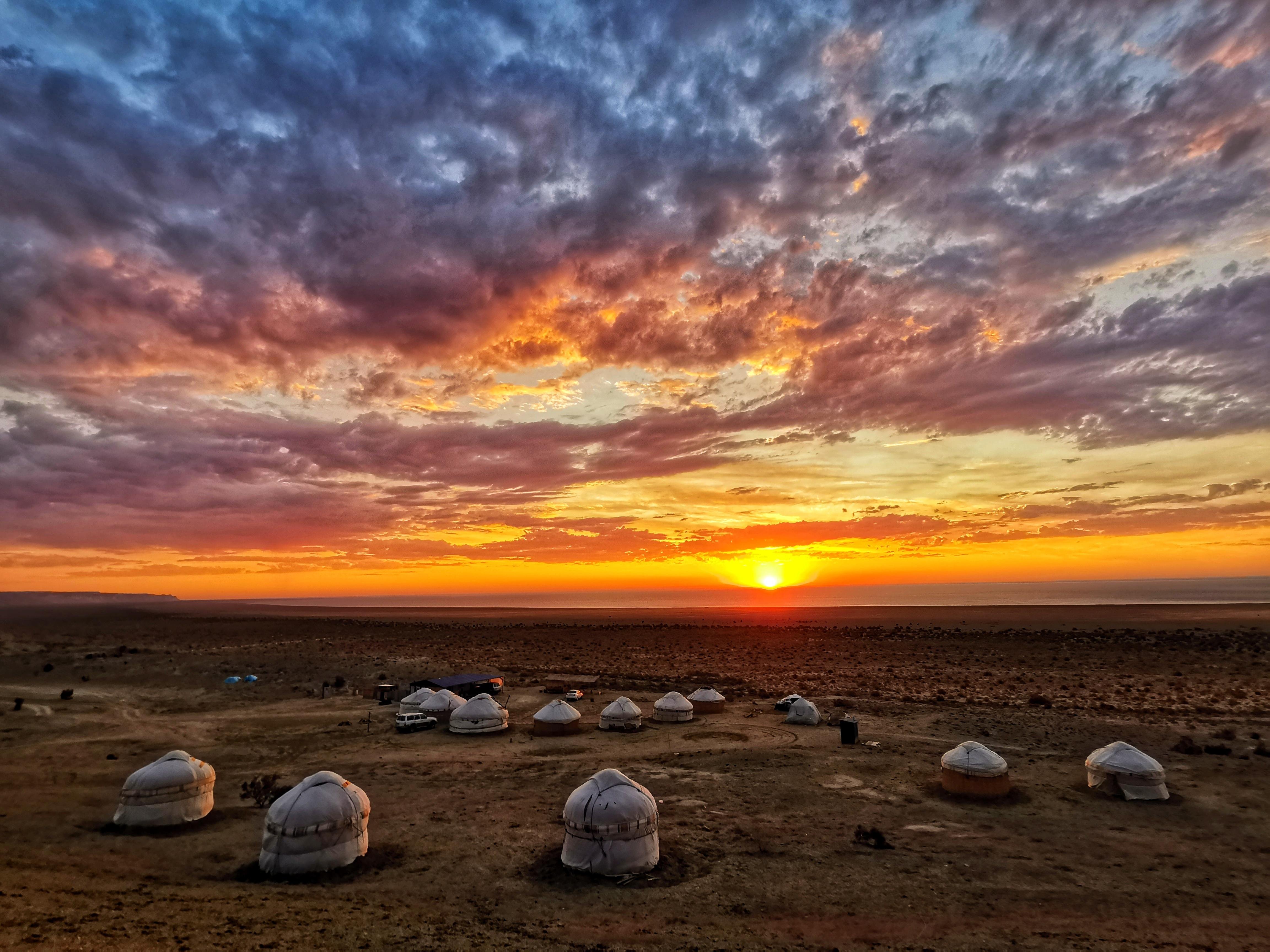
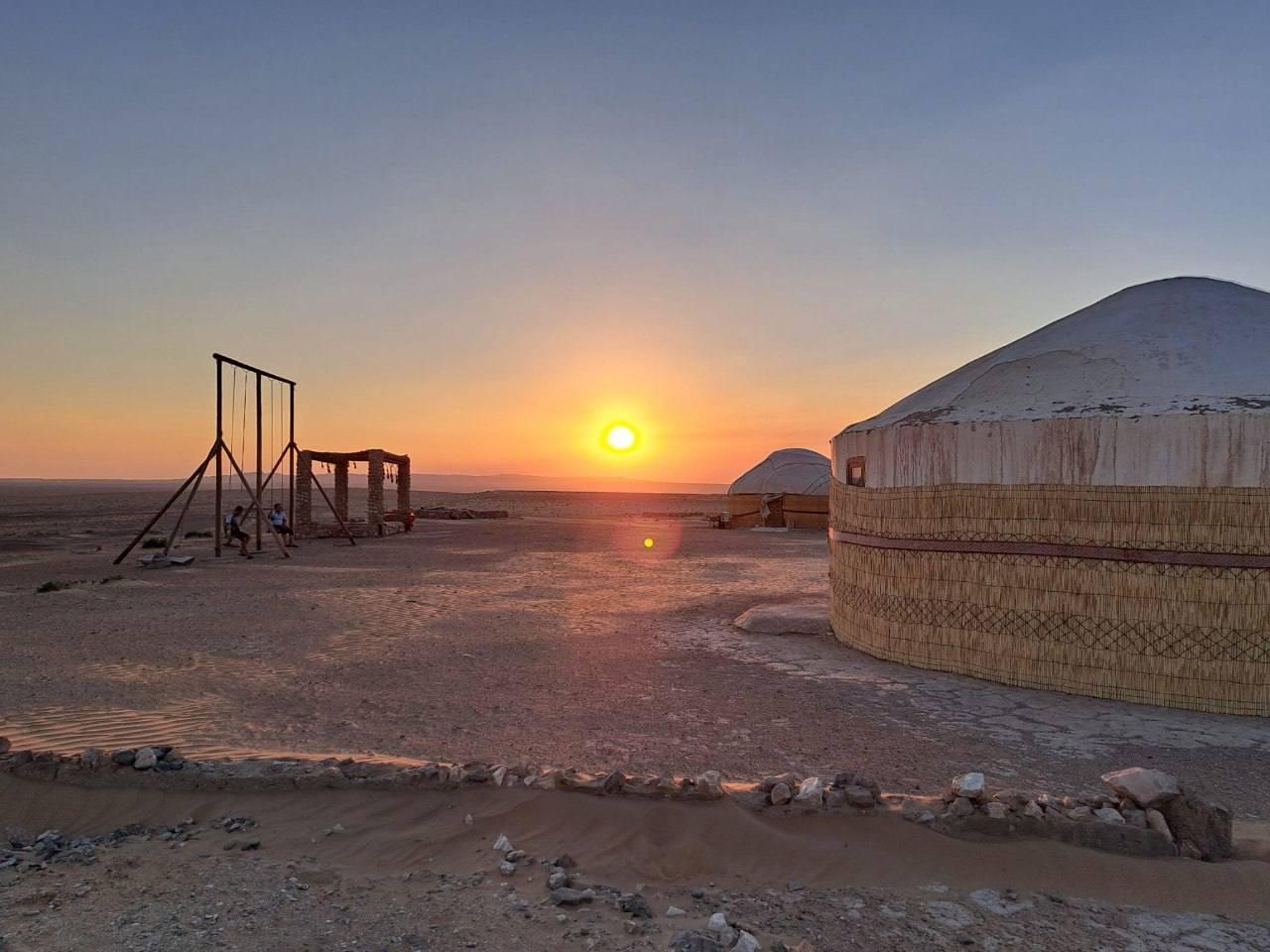
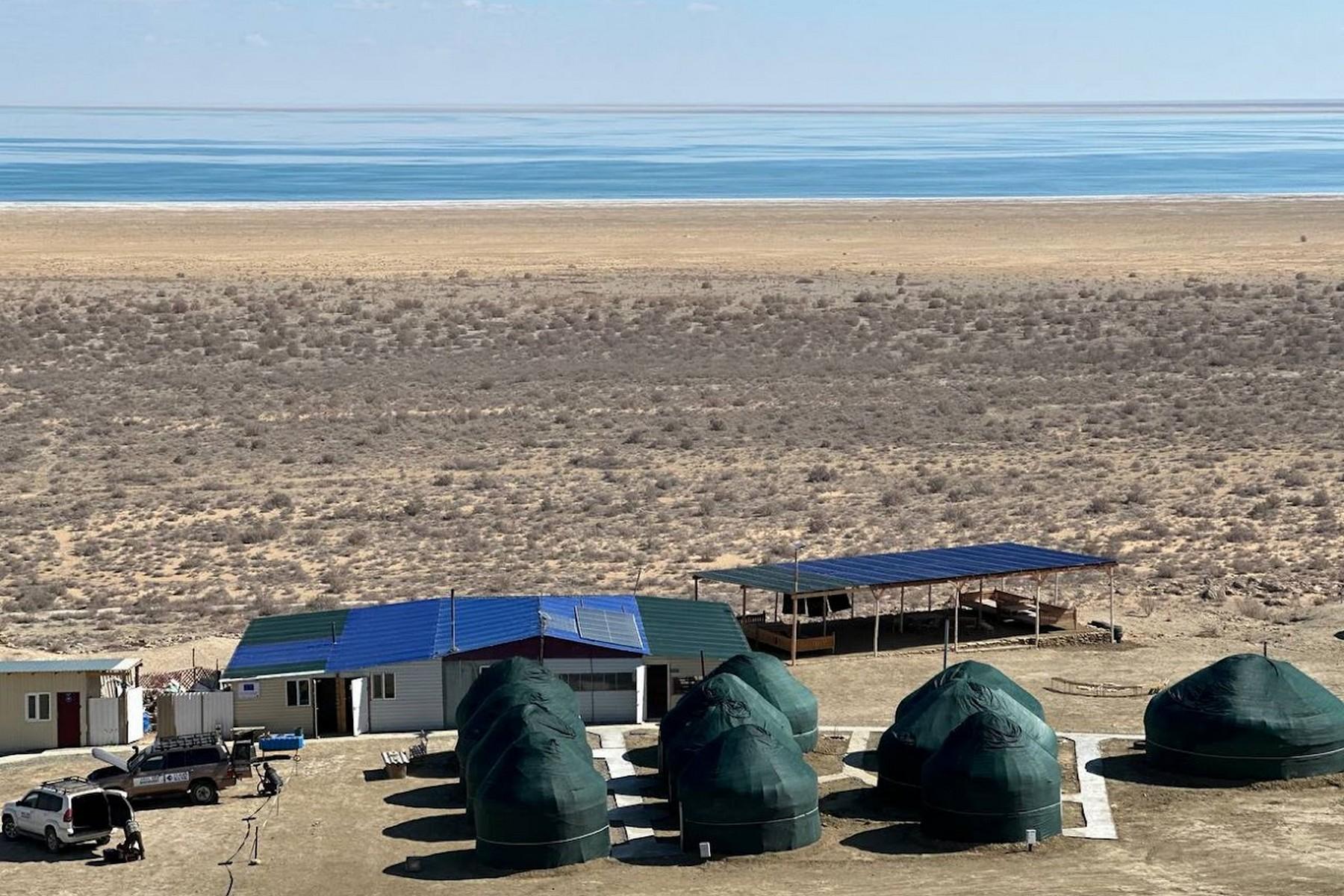
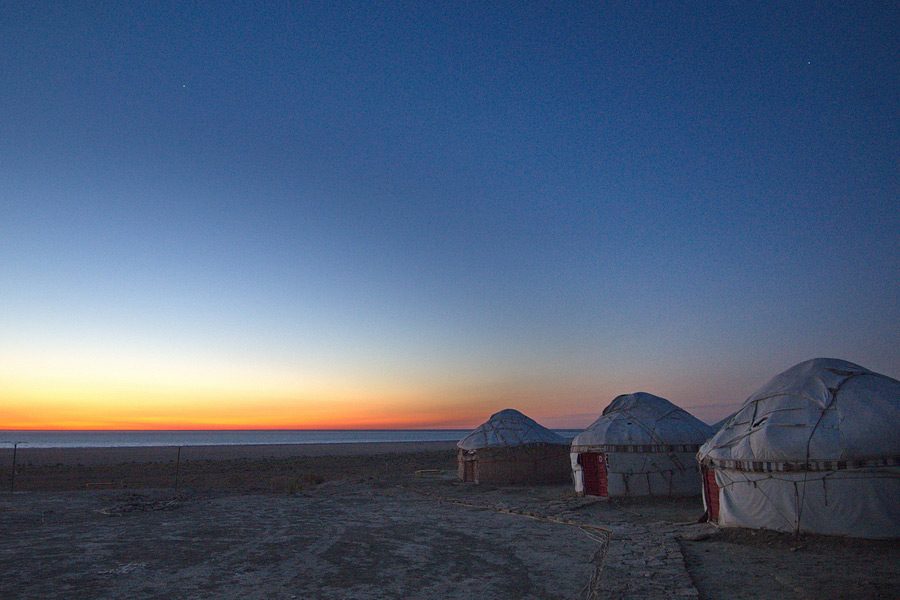
If you've chosen the overnight expedition, the convoy continues south to the shoreline, where shallow brine pools reflect the sky and yurts stand in a crescent formation. You eat plov by kerosene lamp, listening to a former fisherman describe the lake's retreat—how the waterline receded five kilometres in a single year during the 1980s, how the cannery closed and the port cranes stood idle. At sunrise you walk to the water's edge, where salt crystals crust the sand and the only sound is wind across empty seabed.
All the details about your upcoming adventure in one place
The Aral Sea once ranked as the world's fourth-largest lake, covering 68,000 square kilometres between Kazakhstan and Uzbekistan until Soviet irrigation projects diverted the Amu Darya and Syr Darya rivers in the 1960s.
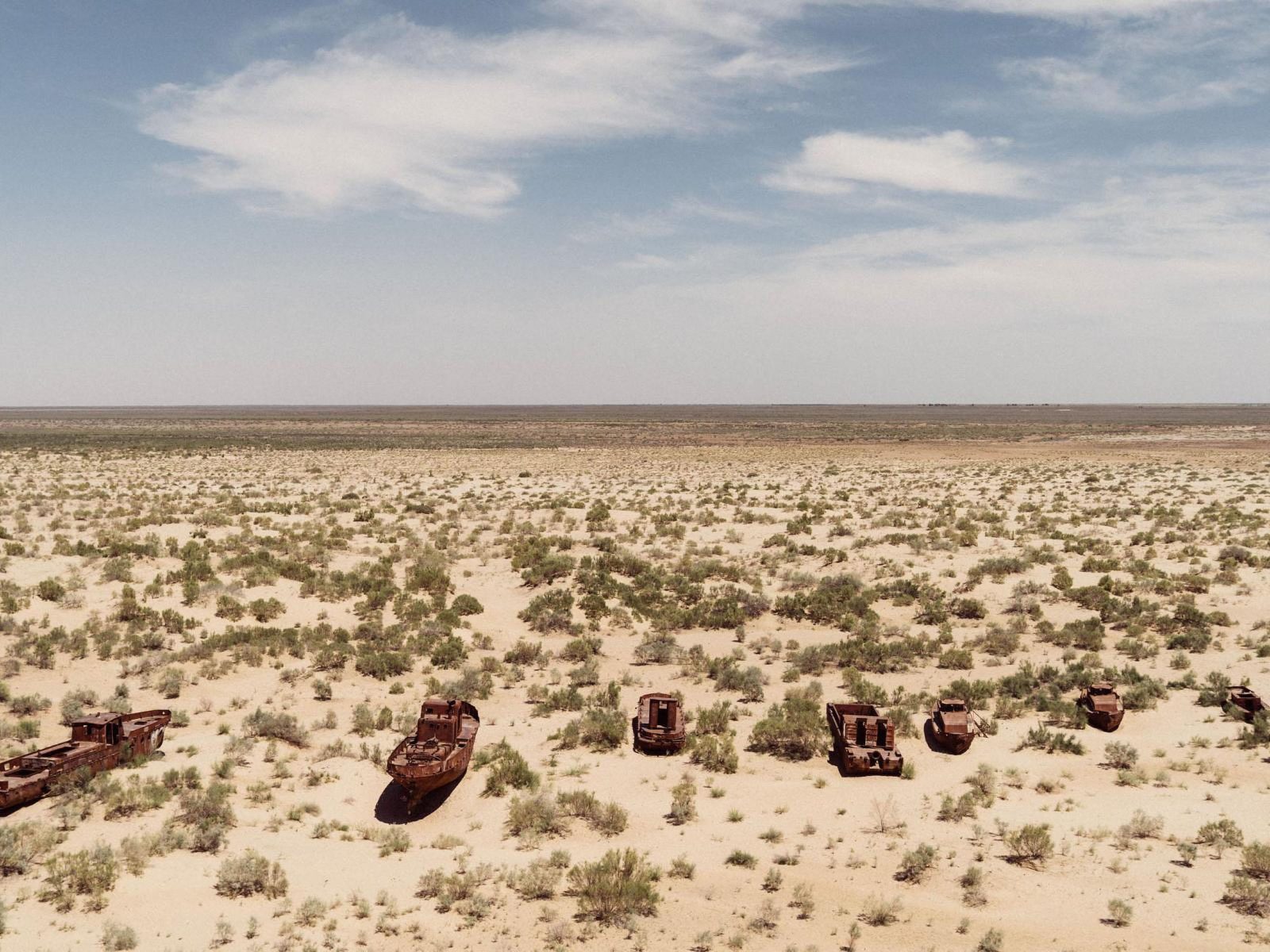
By 2014, the eastern basin had vanished entirely, leaving fishing trawlers marooned 200 kilometres from the nearest shoreline. The town of Moynaq, formerly a bustling port with 40,000 residents and a thriving fish cannery, now sits at the edge of the Aralkum Desert, a salt-poisoned expanse where dust storms laced with pesticide residue sweep across what was once seabed.
Khiva Aral Sea tours depart from the ancient walled city and traverse 450 kilometres northwest through Karakalpakstan, crossing the Ustyurt Plateau's limestone escarpments and reaching the ship graveyard at Moynaq by late afternoon. The rusted hulls—twenty-three vessels catalogued by conservation teams in 2022—include fishing trawlers, tugboats, and cannery transports, their skeletal frames listing in the sand under light that photographers prize for its clarity and harshness. The site carries no formal interpretation centre; visitors walk freely among the wrecks, where Cyrillic names still cling to bows and the interiors reveal navigational instruments corroded by decades of salt wind.
Multi-day expeditions extend to the Aral Sea's remaining shoreline, where shallow brine pools cling to the southern basin and yurt camps provide overnight shelter. The overnight tour from Khiva includes a stop at the Savitsky Museum in Nukus, which houses the world's second-largest collection of Russian avant-garde art, salvaged during Stalin's purges and hidden in the Karakalpak desert. Guides interpret the hydrological collapse through firsthand accounts from former fishermen, some of whom still live in Moynaq and remember the lake before its retreat.
The Aral Sea disaster remains one of the century's starkest environmental lessons, a man-made desertification accelerated by cotton monoculture and central planning that ignored downstream consequences. The ship graveyard at Moynaq stands as both memorial and warning, visited by 12,000 travellers annually who trek across Karakalpakstan's salt flats to witness the rusted remnants of a maritime economy extinguished within a generation.
By 2014, the eastern basin had vanished entirely, leaving fishing trawlers marooned 200 kilometres from the nearest shoreline.
Dress in light, breathable layers to manage the extreme desert climate. Good-quality walking shoes are necessary for navigating the sand and metal debris.
Keep all belongings in a secure daypack during your khiva aral sea tour. Local guides generally recommend minimal luggage to facilitate easier movement through the arid terrain.
Capture the stark ship wrecks and vast landscapes during the optimal 09:00–18:00 arrival window. Note that some local museums may charge a separate photography fee.
The khiva aral sea tour is educational for older children interested in geography and environmental history. Facilities in Moynaq are rustic, so prepare for limited amenities.
The site is located on a former seabed with soft sand and uneven surfaces. It is not suitable for individuals with mobility challenges.
Carry plenty of bottled water as desert conditions are severe. Local homestays and the cafe near the lighthouse offer traditional options like lagman.
Opening Hours
09:00–18:00
Address
Moynaq, Karakalpakstan, Uzbekistan
Accessibility
Remote desert terrain with uneven sand paths
Best Arrival
09:00–18:00
Navigation
Arrive via 4x4 transport from Nukus or Khiva
Full refunds are typically available for bookings cancelled at least 24 hours in advance. Please verify specific terms with your khiva aral sea tour provider regarding the 30,000 UZS conservation fee.
Recommended time
4-6 hours
A khiva aral sea tour requires significant travel time from the city, making a half-day allocation essential to properly explore the rust-colored ship graveyard in Moynaq. While khiva aral sea tour tours generally follow a fixed schedule, visitors should budget extra time if planning to walk toward the receding shoreline or inspect the desert landscapes. Choosing khiva aral sea tour tickets in advance ensures logistical efficiency, though the remote nature of the Karakalpakstan region means crowds remain thin throughout the day. Opt for these khiva aral sea tour tour options to balance your transit with ample opportunity for inspecting the iron hulls of the abandoned vessels.
Crowd levels through the day
The Aral Sea once ranked as the world's fourth-largest lake, spanning 68,000 square kilometers across the Kazakh-Uzbek border and sustaining a thriving fishing industry that employed 60,000 people by the 1950s. Soviet central planners identified the twin rivers feeding the basin—the Amu Darya and Syr Darya—as vital water sources for cotton monoculture across Central Asia. In 1960, Moscow launched an irrigation expansion that diverted nearly the entire flow of both rivers into thousands of kilometers of canals, most of them unlined and losing half their water to seepage and evaporation before reaching the fields. Within two decades the consequences became irreversible. By 1987 the lake had split into distinct northern and southern basins, and the southern portion continued to fragment into smaller pools. The town of Moynaq, once a bustling port 20 kilometers from the shore, found itself stranded in desert by 1980 as the waterline receded at a rate exceeding one kilometer per year. The fishing fleet—rusting hulls now scattered across salt flats—became the most visible symbol of ecological collapse. Salinity tripled, then quadrupled, exterminating all 24 native fish species and turning the lakebed into a source of toxic dust storms laced with pesticide residue and salt. Today the Aral Sea retains roughly 10 percent of its 1960 volume, and the southern basin has desiccated entirely in some years. Khiva Aral Sea tour operators now guide visitors across 200 kilometers of highway to Moynaq, where the ship graveyard serves as an open-air monument to Soviet-era resource extraction. A small museum in Moynaq documents the lake's transformation through photographs, fishing tools, and testimonies from displaced communities. International organizations have focused recovery efforts on the northern basin in Kazakhstan, where a dam completed in 2005 stabilized water levels and restored limited fishing, but the southern Uzbek section remains a cautionary study in irreversible environmental engineering. Khiva Aral Sea tours and related Aral Sea excursion tickets provide access to this landscape, allowing travelers to witness the scale of desertification firsthand.
Soviet irrigation diversion begins, drawing the Amu Darya and Syr Darya away from the Aral Sea basin.
Water volume drops by one-third; salinity rises sharply, killing fish stocks and collapsing the regional economy.
The Aral Sea splits into separate northern and southern basins as the waterline retreats beyond natural thresholds.
Moynaq's fishing fleet is abandoned in desert; the town becomes isolated 60 kilometers from the receding shore.
Kazakhstan completes a dam on the northern basin, stabilizing water levels and enabling partial ecosystem recovery.
The southern basin desiccates entirely in drought years; toxic dust storms spread across surrounding farmland.
Khiva Aral Sea tour groups visit Moynaq's ship graveyard, now a primary site for understanding the disaster's human and environmental toll.
Stand between the rusted hulls to frame the vast expanse of the former seabed against the arid horizon. This remains a central stop on any khiva aral sea tour.
Position yourself at this elevated point to capture panoramic views of the desolate desert landscape stretching toward the remaining water. Use a wide-angle lens to emphasize the scale of this Karakalpakstan landmark.
Walk through the narrow spaces between the metal frames of the largest vessels to catch unique light patterns filtering through corroded steel. This serves as a key feature for those booking khiva aral sea tour tours.
Located at the perimeter of the former port, this spot offers a clear vista of the changing terrain and salt flats. It is frequently included in varied khiva aral sea tour tour packages.
A khiva aral sea tour offers families a unique opportunity to explore the poignant history of the region while navigating the vast, desert landscapes of Karakalpakstan. Visiting these remote environmental landmarks requires careful planning to ensure a comfortable experience for children.
The rugged terrain of the former sea bed and desert environment is not suitable for strollers, so plan to carry infants or ensure children are steady on their feet
This excursion is better suited for older children and teens who can appreciate the educational significance of the maritime museum and the history behind the ship graveyard
Amenities are very limited in this remote area, so pack all necessary supplies, water, and snacks before departing for your khiva aral sea tour tour
Be prepared for long travel days as you traverse the desert to reach these landmarks, making it wise to break up the journey with frequent stops for younger travelers
Dining options are scarce near the sites, so carrying extra food and hydration is essential when booking your khiva aral sea tour tickets
The region is arid with minimal precipitation, but summer heat is intense, so prioritize travel during the 09:00–18:00 best arrival window to utilize optimal natural light and cooler morning or evening temperatures.
Dining options near the Moynaq ship graveyard are limited, making careful planning essential for any khiva aral sea tour. Visitors typically rely on local guesthouses for authentic Karakalpak meals, as there are few dedicated restaurants near the Aral Sea landmarks.
Located in Moynaq, this spot serves traditional beshbarmak and fresh fish caught from regional waters, perfect for those on a khiva aral sea tour tour. It offers a authentic glimpse into local cuisine after exploring the rust-colored ship hulls.
$10-15
$5-10
Everything you need to know for your journey
The site is open Tuesday through Sunday from 09:00–18:00. Please note that it is closed on Mondays.
Yes, there is a conservation fee of 30,000 UZS per person for foreign visitors.
The best time for a khiva aral sea tour is during the shoulder seasons of spring (April–May) or autumn (September–October) to avoid extreme heat.
Yes, khiva aral sea tour tickets and transport should be arranged through licensed local operators in advance.
The tour involves significant driving and desert terrain, which may be challenging for very young children.
There are local guesthouses and a cafe near the lighthouse, but carrying extra water is highly recommended.
Yes, the rusted ship graveyard is the primary landmark on a khiva aral sea tour.
The drive from Khiva can take 8-10 hours, often requiring a 2-day trip including stops at local monuments.
Wear breathable, long-sleeved clothing for sun protection and sturdy walking shoes for the sandy seabed.
Join thousands of happy travelers who have discovered this incredible experience
Book Your Experience Now